
Miami Emerges as America's Leading Market for New Business Formation
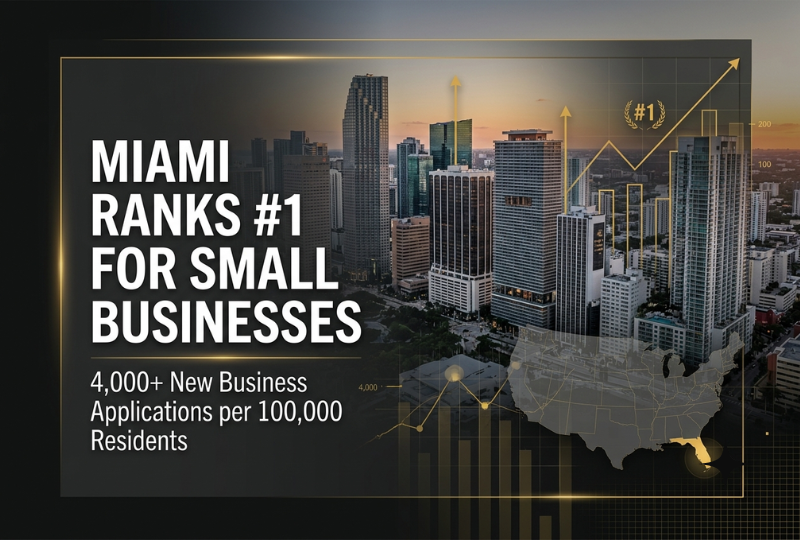
The economic landscape of the United States is witnessing a definitive geographic realignment, and Miami is leading the charge. According to recent economic data, Miami has officially been ranked as the number one major metropolitan area in the country for small businesses and startup activity in 2026. This ranking is not merely a localized milestone, it signals a fundamental restructuring of where corporate innovation and operational agility thrive.
Recent business formation statistics indicate that Miami is generating more than 4,000 new business applications per 100,000 residents. This staggering volume places the city's business formation rates at more than two times the national average. Nationally, this ranking matters because it establishes South Florida as the premier engine for economic resilience. As traditional gateway cities face decelerating commercial activity, Miami has successfully converted its post-pandemic momentum into a permanent, institutional-grade entrepreneurial ecosystem.
The Numbers Behind Miami's Entrepreneurial Boom
Record Business Application Activity
The velocity of commercial growth in Miami is underpinned by sustained, record-breaking application activity. Industry research shows that small business formation has expanded consistently over the past twenty-four months. This startup creation trend is distinct because it represents long-term operational commitments rather than temporary side ventures. The continuous growth in business applications reflects high levels of localized consumer demand and an environment where new corporate entities can rapidly achieve scale.
Population and Wealth Growth Supporting Entrepreneurship
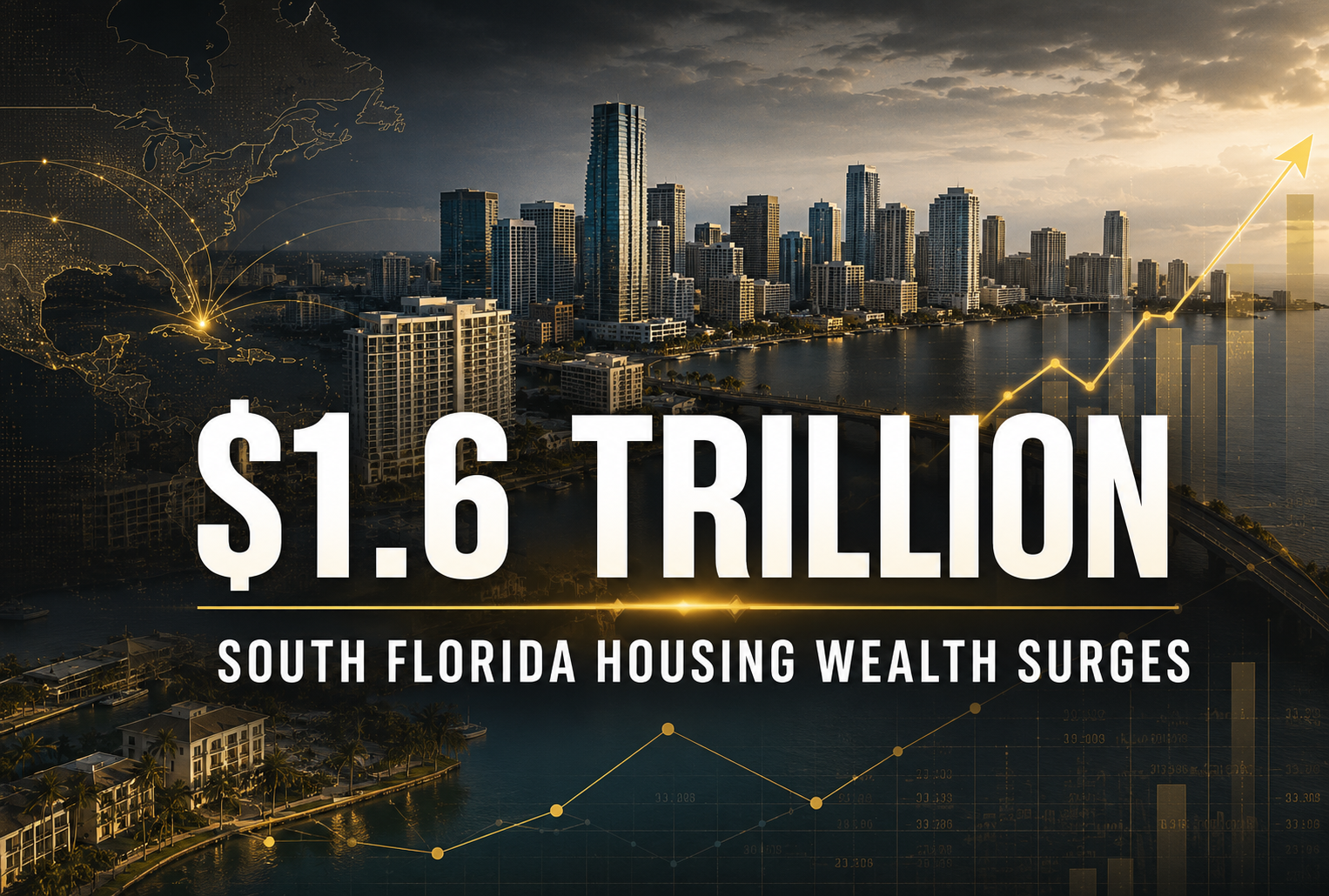
An entrepreneurial ecosystem cannot exist in a vacuum, it requires capital, consumer spending, and human talent. Miami's small business boom is directly sustained by historic shifts in domestic and international migration. Based on trusted market reports, Florida has absorbed billions of dollars in adjusted gross income over recent years, with a major concentration landing in Miami-Dade County.
This wealth migration is characterized by an unprecedented growth in high-income households. Out-of-state driver license exchanges in early 2026 rose by 24 percent compared to the previous year, with new residents moving predominantly from high-tax states such as New York, California, and Texas. This influx of capital creates a highly lucrative consumer demographic, giving local small businesses a deeply capitalized built-in customer base.
Why Entrepreneurs Continue Choosing Miami
The ongoing concentration of startup activity in South Florida is driven by a highly strategic mix of regulatory, financial, and demographic advantages.
Business-Friendly Tax Environment
Florida remains one of the most compelling corporate jurisdictions in the nation due to its tax structure. The lack of a state personal income tax allows business owners to reinvest a higher percentage of their earnings directly back into operational scaling. Furthermore, recent legislative updates, such as the removal of the state sales tax on commercial leases effective late 2025, have significantly optimized tenant economics and lowered overhead expenses for small business operators.
Access to Capital and Investment
Historically, starting a business outside of traditional tech hubs meant limited access to institutional funding. Today, Miami has bridged that gap. The city has experienced a massive expansion of localized venture capital activity, private equity investment, and robust angel investor networks. The relocation of major financial institutions, a movement often referred to as the creation of Wall Street South, has placed fund managers and investment committees within physical proximity of early-stage and mid-market enterprises.
Talent Attraction and Workforce Growth
The city's ability to attract a highly skilled workforce has changed permanently. The acceleration of remote and hybrid work models has allowed executive-level talent to relocate to South Florida while maintaining global professional ties. This professional services expansion means that local startups have immediate access to top-tier operational, technological, and legal expertise, matching the professional infrastructure of any traditional primary market.
Commercial Real Estate Benefits from Business Formation Growth
Commercial real estate investors and landlords monitor business formation metrics with exceptional scrutiny because new businesses are the direct source of tomorrow's tenant demand. Recent commercial real estate data suggests that this entrepreneurship surge is reshaping every core property asset class.
Office Demand
The traditional corporate office market is experiencing a significant evolution led by small business users. While mega-leases have stabilized, demand for flexible office spaces, coworking environments, and boutique office suites has escalated. In early 2026, Miami's office utilization rate reached 75.1 percent, vastly outperforming the national average. High-velocity business creation has caused direct vacancy to remain resiliently healthy at 14.3 percent. Prime office spaces, particularly top-tier Class A environments in Brickell and Wynwood, continue to command record-high asking rents, frequently touching 90 to 100 dollars per square foot as small firms prioritize high-amenity locations.
Retail Expansion
Retail is currently the tightest commercial asset class in the region, with vacancy rates hovering remarkably low between 3.2 percent and 3.5 percent. Small businesses, including boutique fitness concepts, specialized medical services, artisanal food operators, and premium consumer brands, are aggressively occupying neighborhood commercial corridors. This demand has kept retail asking rents stable and landlord pricing power exceptionally strong.
Industrial and Logistics Demand
The exponential rise of localized e-commerce and regional product distribution has kept industrial real estate highly sought after. Welfare gains and structural population growth have kept industrial vacancy tight at 5.7 percent, with median asking rents holding firm at approximately 17 to 21 dollars per square foot annually. Small businesses require flexible warehousing, local distribution nodes, and last-mile facilities to service the dense, high-wealth South Florida population.
Which Industries Are Driving Growth in Miami?
Miami's small business environment is highly diversified, insulating the broader local economy from sector-specific downturns. The primary drivers of recent growth include:
Financial Services and Real Estate: Wealth management firms, boutique investment brokerages, and private equity offices continue to expand their local footprints.
Technology and E-Commerce: Software development companies, digital marketing agencies, and specialized e-commerce operators leverage Miami's access to Latin American and domestic markets.
Professional Services: Legal practices, accounting firms, and corporate consultancies are growing rapidly to service the influx of relocated enterprises.
Healthcare and Hospitality: High-income population growth has driven substantial small business formation in luxury hospitality, specialized medical clinics, and wellness concepts.
Challenges Facing Miami's Small Business Ecosystem
A balanced market analysis requires addressing the structural friction points that accompany rapid macroeconomic expansion. The foremost challenge for small businesses in Miami is the escalating cost of operations. Rising commercial rents, specifically in premium submarkets, put a strain on early-stage corporate margins.
Additionally, localized labor shortages in technical sectors and elevated property insurance costs across the state present persistent hurdles. Access to affordable commercial space remains tight, forcing some operators to seek space in emerging secondary submarkets. Navigating these economic variables requires experienced commercial real estate guidance to ensure long-term lease stability.
What This Means for Investors and Developers
For commercial real estate stakeholders, business formation growth is a leading indicator of long-term real estate performance. Investors and developers are pivoting toward specific opportunities designed to capture this small business momentum.
Mixed-Use Development
Projects that integrate residential units with ground-floor retail and flexible work settings are seeing exceptional market validation. These environments capture the live-work-play preferences of modern entrepreneurs.
Small-Business-Oriented Retail Centers
Unanchored strip centers and neighborhood retail corridors focused on necessity-based services and local operators offer stable cash flows and low vacancy risks.
Flexible Office Concepts
Developers are increasingly allocating portions of traditional office footprints to move-in-ready, high-spec boutique office layouts that cater to firms with 5 to 50 employees.
Industrial and Commercial Redevelopment
Converting older commercial assets into modernized last-mile logistics centers or flexible creative flex spaces provides excellent adaptive reuse potential.
Outlook for Miami's Business Growth Through 2026 and Beyond
The long-term economic fundamentals of Miami support a highly optimistic outlook. The continuous influx of population, wealth, and corporate capital indicates that Miami's status as the number one market for small businesses is structural, not cyclical. Continued investor confidence and corporate migration are poised to maintain strong demand across the commercial property landscape through 2026 and well into the next decade.
For tailored market intelligence, development advisory, and premier investment sales opportunities in the South Florida commercial real estate market, connect with Molka Epelboim to strategically align your portfolio with Miami's historic economic expansion.