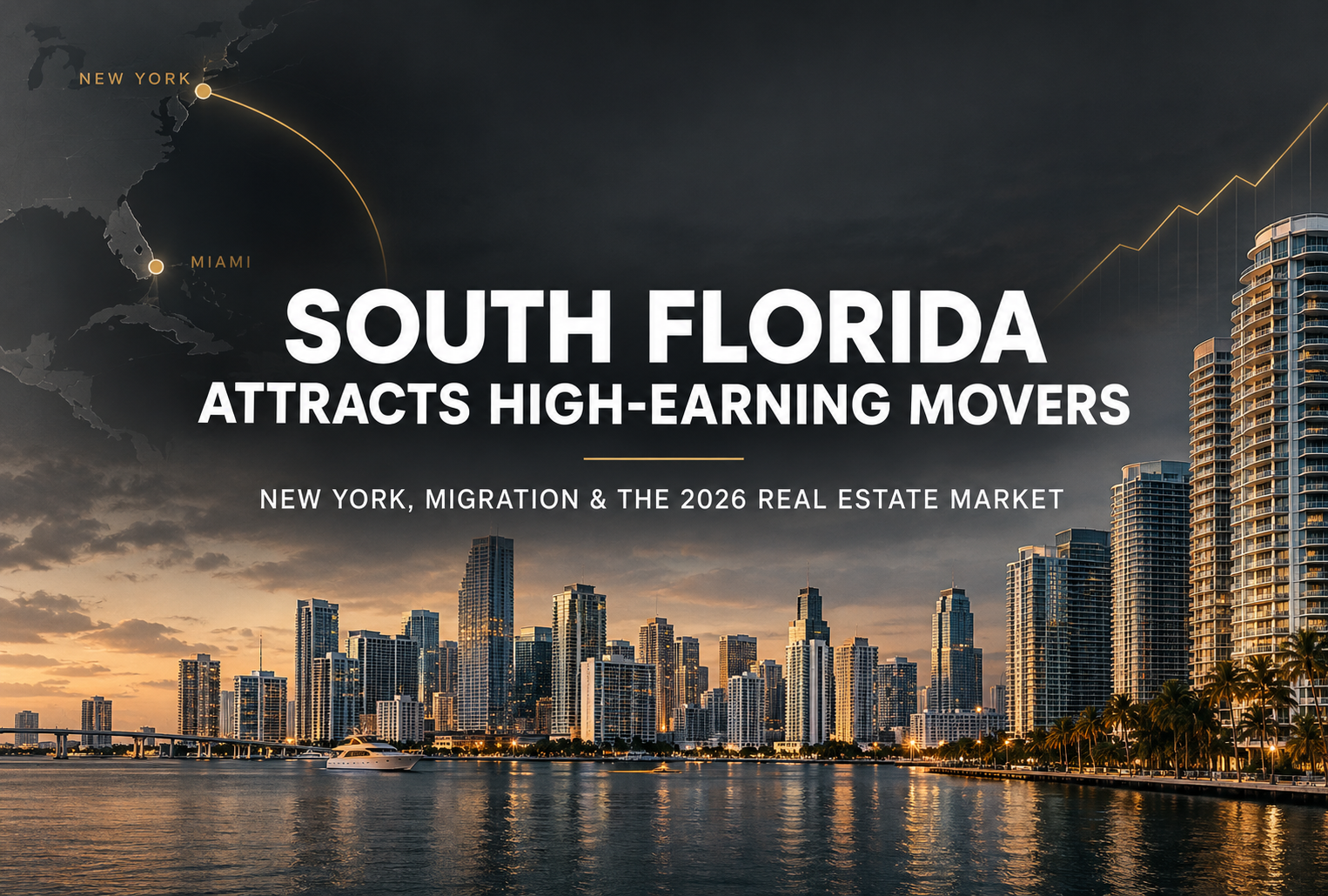
The economic landscape of South Florida continues to evolve as high-earning professionals, entrepreneurs, and corporate leaders make the region their permanent home. Driven by a combination of business expansions, professional flexibility, and favorable economic conditions, this steady wave of affluent relocations has redefined local housing demand. Among the primary origins for these incoming households, New York consistently leads net migration inflows, channeling billions in adjusted gross income directly into the Sun Belt. Understanding how these economic migration patterns interact with local housing inventory is essential for anyone navigating the South Florida real estate market.
Understanding the Latest High-Income Migration Trends
Recent data from the Internal Revenue Service and economic research institutions highlight a profound shift in where high-earning households choose to establish residency. While pandemic-era migration peaks have naturally cooled into a more sustainable pace, the directional flow remains heavily concentrated toward no-income-tax states, with Florida capturing the largest net share of adjusted gross income in the nation.
The New York-to-Florida Economic Corridor
New York State remains the single largest supplier of net migration inflows and economic capital to Florida. IRS state-to-state migration data indicates that the New York-to-Florida corridor accounts for tens of thousands of migrating tax returns and billions of dollars in adjusted gross income annually. Importantly, economic analysis reveals a distinct income gap: households relocating into Florida report average adjusted gross incomes significantly higher than those of departing residents. This influx is heavily concentrated among senior executives, finance professionals, technology founders, and high-net-worth retirees seeking lifestyle alignment and structural tax efficiency.
Why South Florida Continues to Attract Professionals
The appeal of Miami-Dade, Broward, and Palm Beach counties extends far beyond simple tax incentives. South Florida has matured into a dynamic, multi-industry global hub.
Economic Expansion and Professional Infrastructure
The region's economic momentum is anchored by a thriving financial sector—often dubbed "Wall Street South"—alongside expanding technology ventures, international trade networks, and robust healthcare systems. Major financial institutions, venture capital firms, and multinational corporations have established substantial corporate footprints across Miami, Fort Lauderdale, and West Palm Beach. This corporate expansion generates a continuous pipeline of high-paying local employment opportunities, drawing top-tier talent from major metropolitan centers like New York, Chicago, and Boston.
Furthermore, world-class educational institutions, an internationally connected aviation and logistics network, and a favorable climate support a high quality of life that appeals to both established professionals and growing enterprises.
What Migration Trends Mean for South Florida Real Estate
Population growth and high-income migration do not automatically translate into uniform price increases across every neighborhood. Instead, the market responds through localized dynamics influenced by purchasing power, housing inventory, and prevailing mortgage rate environments.
Across South Florida, the influx of high-earning buyers has sustained demand for well-located single-family homes and luxury condominiums, particularly in prime coastal and suburban enclaves within Broward and Palm Beach counties. However, overall market appreciation has stabilized compared to the rapid surges of previous years. Total active inventory has shown signs of balancing, and buyers are exercising greater selectivity. While luxury properties in prime employment and lifestyle centers maintain robust valuations due to strong cash-purchasing power among relocating executives, middle-market segments face affordability checks tied to insurance costs and interest rate fluctuations.
Opportunities and Considerations for Real Estate Buyers and Investors
For homebuyers and real estate investors, navigating today's market requires separating short-term sentiment from long-term real estate fundamentals.
Targeted Neighborhood Analysis: Macro-level migration data must be paired with micro-level due diligence. Proximity to expanding commercial centers, top-tier schools, and transit infrastructure remains a primary driver of long-term value.
Evaluating Carrying Costs: Professional buyers must factor in comprehensive property ownership expenses, including property taxes, homeowners association fees, and property insurance premiums, when calculating potential rental yields or long-term carrying costs.
Rental Market Dynamics: High rental demand persists in urban core districts and suburban employment hubs, driven by incoming professionals who prefer to rent before committing to a permanent purchase.
What to Watch in South Florida's Real Estate Market in 2026
As the market progresses through 2026, several key indicators will shape residential real estate trajectories. Monitoring inventory levels across Miami-Dade, Broward, and Palm Beach will clarify whether supply can adequately keep pace with incoming professional demand. Additionally, shifts in corporate office expansions and regional employment growth will continue to influence local housing absorption rates. Staying attuned to these evolving economic metrics allows buyers and investors to position themselves advantageously.
Conclusion
The ongoing migration of high-earning professionals from New York and other major metropolitan areas underscores South Florida's enduring transformation into a premier economic capital. While housing market conditions require careful evaluation of inventory, pricing, and carrying costs, the region's long-term economic fundamentals remain compelling.
Whether you are looking to relocate your household, purchase a primary residence, or expand your investment portfolio, expert guidance is vital. Contact Molka Epelboim today to discuss your South Florida real estate goals and navigate the market with confidence.