
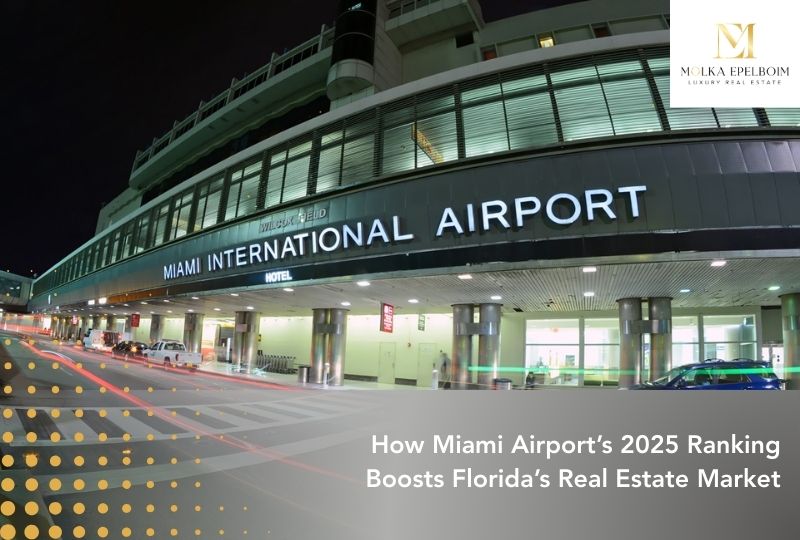
Miami International Airport (MIA) has long been a gateway to Latin America, the Caribbean, and Europe, but in December 2025 it achieved a new milestone: Booking.com for Business ranked MIA the No. 3 best U.S. airport for business travelers, after analyzing the world’s 50 busiest airports across key performance categories. This recognition reflects not only the airport’s operational excellence but also Miami’s expanding role as a global business destination.
For Florida’s real estate market—especially Miami-Dade—this ranking is more than a badge of honor. It is a catalyst for increased demand, higher property values, and accelerated commercial development.
What Drove MIA to Rank No. 3 in the U.S.?
1. Unmatched Car‑for‑Hire Availability
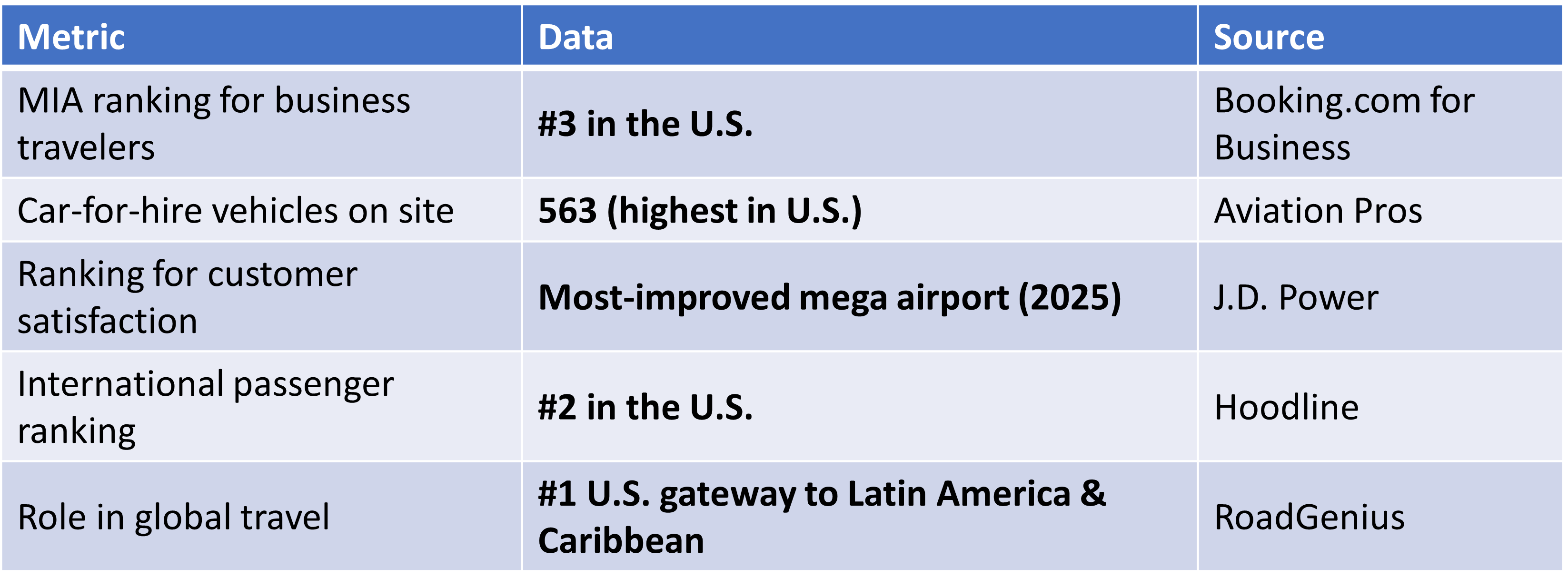
Booking.com for Business highlighted that MIA leads all U.S. airports with 563 car‑for‑hire vehicles on site, offering unmatched flexibility for business travelers moving between meetings, hotels, and corporate districts.
2. Massive Infrastructure Investments
MIA’s ongoing multibillion‑dollar modernization program includes:
Terminal upgrades
Technology improvements
Faster security processing
Expanded lounges and business‑friendly amenities
These improvements contributed to MIA being named the most‑improved mega airport in North America for customer satisfaction by J.D. Power in 2025.
3. Strategic Proximity to Miami’s Business Districts
Business travelers can reach:
Brickell City Centre in 22 minutes
Downtown Miami in under 15 minutes
Coral Gables in 20 minutes
This accessibility is a major competitive advantage cited in the 2025 ranking.
4. High Passenger Volume and Global Connectivity
According to 2024–2025 airport statistics:
MIA is Florida’s busiest airport
It is the nation’s busiest entry point to Latin America and the Caribbean
This global connectivity is essential for executives, investors, and multinational corporations.
How MIA’s Ranking Impacts the Florida Real Estate Market
1. Increased Corporate Relocations
Miami has already seen a surge of:
Fintech firms
Hedge funds
Latin American corporate headquarters
Tech startups
With MIA’s improved ranking, companies now have stronger incentives to relocate or expand operations in Miami, boosting demand for:
Class A office space
Luxury rentals
High‑end residential properties
2. Rising Demand in Brickell, Downtown, and Coral Gables
Business travelers prefer staying close to meetings, which increases demand for:
Short‑term rentals
Corporate housing
Luxury condos
Properties near transit corridors and business districts see higher occupancy and appreciation.
3. Boost in Commercial Real Estate Development
Developers are responding to increased business travel by expanding:
Mixed‑use towers
Office buildings
Hotel‑residential hybrids
Retail corridors
The airport’s ranking reinforces investor confidence in Miami’s long‑term economic growth.
4. Higher International Buyer Activity
Because MIA is a primary gateway for Latin American and European investors, improved airport performance directly correlates with:
More international property tours
Higher foreign investment volume
Increased luxury real estate transactions
5. Strengthened Tourism‑Business Hybrid Market
Miami’s unique blend of leisure and business travel creates a dual‑demand environment that supports:
Airbnb and short‑term rental profitability
Hotel‑condo developments
Waterfront luxury markets
Key 2025 Statistics Supporting MIA’s Growth
What This Means for Buyers, Sellers & Investors
For Buyers
Expect rising prices in:
Brickell
Edgewater
Downtown
Coral Gables
Properties near transit and business hubs will appreciate faster.
For Sellers
The influx of business travelers and corporate relocations increases:
Buyer competition
International interest
Property values
For Investors
MIA’s ranking strengthens Miami’s position as a global investment magnet.
Top opportunities include:
Short‑term rentals
Corporate housing
Mixed‑use developments
Office‑residential hybrids