
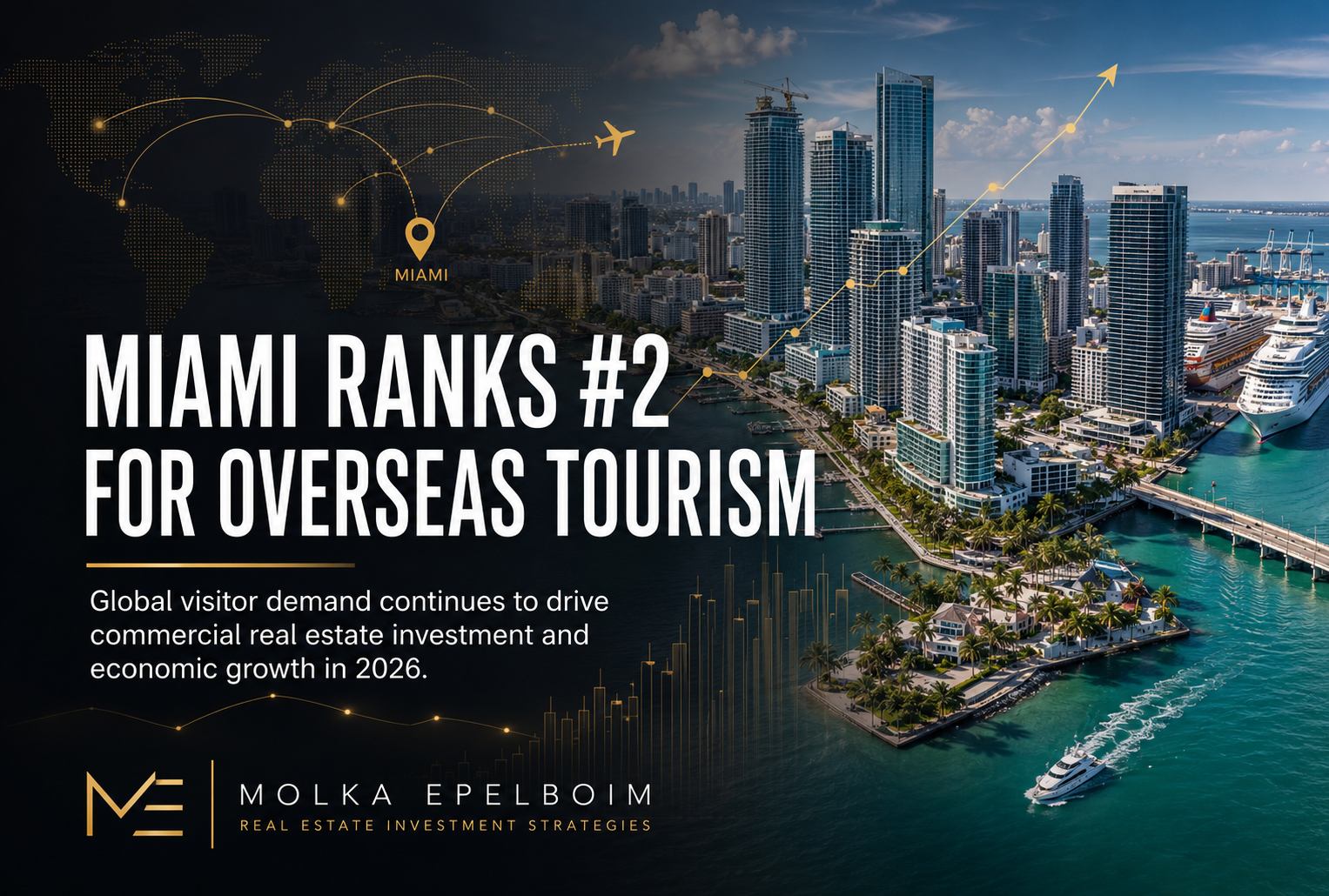
Miami has officially cemented its status as a premier global destination, securing the position of the second most popular U.S. city for overseas travelers. This milestone is not merely a testament to the city’s vibrant culture and climate; it is a structural pillar of South Florida’s economy and a primary catalyst for the region’s robust commercial real estate market.
Miami Continues to Strengthen Its Global Appeal
In 2024 and throughout 2025, the Miami-Fort Lauderdale-West Palm Beach metropolitan area welcomed approximately 4.4 million international visitors. While New York City remains the country's top gateway, Miami’s distinct profile as a leisure-dominated, beach-oriented, and Latin American-centric hub distinguishes it from other major U.S. markets.
This ranking matters profoundly to investors and developers. International tourism acts as a "gateway" for capital investment. Visitors who arrive for vacations often return for business, and many ultimately transition into real estate investors or long-term residents. As the primary link between North America, Latin America, and Europe, Miami’s position as a global intersection ensures a consistent influx of international liquidity that supports asset valuations across the city.
What Makes Miami So Attractive to International Travelers?
Miami’s sustained appeal is built on a trifecta of lifestyle, connectivity, and consistent demand.
World-Class Lifestyle
Miami provides an authentic blend of experiences that are difficult to replicate. From the Art Deco allure of South Beach and the artistic immersion of Wynwood Walls to the luxury retail corridors of Brickell and the Design District, the city offers a diverse array of leisure activities. Fine dining and international events, such as Art Basel and major sporting spectacles, maintain a year-round calendar that keeps Miami top-of-mind for global travelers.
Strong Air Connectivity
Miami International Airport (MIA) remains the second-busiest U.S. international airport. This infrastructure is vital. By providing seamless entry for millions of passengers from across the globe, MIA ensures that Miami remains a preferred hub for international travel, minimizing friction for tourists who prioritize accessibility.
Year-Round Tourism
Unlike many seasonal U.S. destinations, Miami benefits from a climate-driven demand cycle that extends throughout the entire year. While winter months see the arrival of "snowbirds," the summer months frequently attract surges of international travelers, particularly from Latin America. This seasonal balance stabilizes the hospitality industry and prevents the steep occupancy dips common in other regions.
Tourism’s Impact on Miami’s Economy
Tourism is far more than a leisure sector in Miami; it is a core economic engine. Recent data suggests that tourism generates over $30 billion in annual economic impact for the Greater Miami area.
Hospitality and Accommodations
With lodging accounting for nearly half of all visitor spending, hotel performance remains a benchmark for market health. Miami consistently leads the nation’s top 25 hotel markets in key performance indicators, including occupancy rates, average daily room rates, and revenue per available room.
Retail and Dining
International visitors are high-value consumers. According to industry reports, international guests often spend significantly more per person, per trip compared to domestic travelers. This spending directly supports the expansion of luxury retail, high-end restaurant groups, and entertainment venues that define Miami’s urban experience.
Why Tourism Fuels Commercial Real Estate Demand
The relationship between tourism and commercial real estate is symbiotic. High visitor volume creates a "velocity of capital" that drives demand across several sectors.
Hotel Development: Sustained occupancy trends and high average daily rates continue to attract institutional capital for both new construction and trophy-asset acquisitions.
Mixed-Use Projects: Developments that integrate residential, office, and hospitality are becoming the standard. These projects capitalize on visitor foot traffic to sustain retail and restaurant components.
Retail Leasing: The "tourist dollar" supports premium retail rents in districts like the Design District and Brickell, where international brands are increasingly focused on establishing flagship presence.
Luxury Residential Investment: Tourism is often the first step in a conversion pipeline. Visitors who experience the city’s lifestyle are more likely to pursue second-home ownership, fueling demand for luxury condos in downtown and waterfront submarkets.
International Tourism Supports Business Expansion
Tourism often serves as a precursor to broader commercial expansion. When international brands see high visitor engagement, they are more confident in establishing brick-and-mortar operations. This trend is visible in the influx of foreign business activity and the rapid growth of international restaurant and retail concepts that seek to serve the global demographic visiting the city.
The Investment Opportunity Behind Visitor Growth
The data is clear: tourism fundamentals in Miami are strong and resilient. For commercial investors, hospitality developers, and retail property owners, this environment provides significant long-term upside.
The strategy for smart capital is to focus on walkable, centrally located, and high-density districts. Areas like Brickell and Downtown Miami are benefiting from this cycle because they offer the connectivity and quality product mix that international investors and travelers demand. The stability provided by global events, combined with the city's role as an international hub, creates a compelling case for acquiring assets in well-managed, hospitality-adjacent corridors.
Market Outlook for Miami Beyond 2026
Looking ahead, Miami’s growth trajectory remains positive. The city is set to benefit from major global sporting events, continued population growth, and sustained infrastructure investment. While global economic factors may lead to minor fluctuations in international arrival numbers, the city's brand equity is robust. For those in the commercial real estate space, the focus should remain on assets that capture the "global city" narrative—properties that provide quality, accessibility, and proximity to the urban centers that visitors and investors frequent.
Call to Action
Understanding the correlation between tourism trends and real estate performance is essential for making informed investment decisions in South Florida. If you are seeking strategic commercial real estate advisory, assistance with hospitality or mixed-use development, or specialized market intelligence, please connect with Molka Epelboim.
We provide comprehensive insights and strategic acquisition and disposition services for institutional clients and private investors aiming to capitalize on Miami’s continued global ascent.