
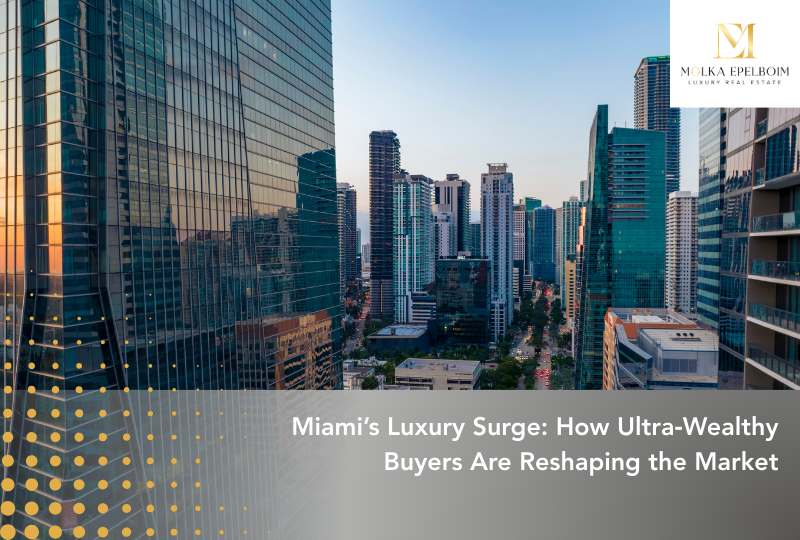
Billionaires buying homes in Miami has become one of the most defining forces in Florida real estate. Over the past several years—and accelerating into late 2025 and early 2026—ultra‑high‑net‑worth (UHNW) individuals have continued acquiring primary residences, vacation estates, and investment properties across Miami‑Dade County.
This trend matters because Miami’s luxury segment no longer operates in isolation. Billionaire activity now influences pricing, inventory, development, and even mid‑market affordability. Understanding these dynamics is essential for buyers, sellers, and investors navigating Florida’s fast‑evolving housing landscape.
Billionaire Buying Trends in Miami
UHNW migration to Miami surged after 2020, but the momentum has not slowed. By Q4 2025, Miami ranked among the top U.S. destinations for billionaire relocations, driven by:
Florida’s tax advantages
Miami’s expanding finance and tech sectors
Global wealth diversification
Strong luxury property appreciation
Industry data from late 2025 shows:
Luxury home sales above $10 million increased between 12% and 18% year‑over‑year, depending on submarket.
Cash purchases accounted for more than 55% of transactions above $5 million, a rate significantly higher than pre‑2020 norms.
Foreign UHNW buyers represented roughly 30% of luxury transactions, with notable activity from Latin America, Europe, and the Middle East.
Luxury Market Growth
Miami’s luxury segment has expanded faster than any other tier.
Median Luxury Prices
By late 2025, the median price for Miami single‑family homes in the top 10% of the market rose 8%–10% year‑over‑year, outpacing the broader market’s growth rate.
Days on Market
High‑end properties spent 20% fewer days on market compared to 2024, reflecting strong demand and limited supply.
Inventory Shifts
Luxury inventory remained tight, with months of supply hovering between 6 and 7 months, below the balanced‑market threshold for this price tier. New construction helped, but demand continued to exceed supply.
Impact on the Broader Housing Market
While billionaire purchases occur at the top of the market, their influence cascades downward.
Pricing Tiers
High‑end sales push up median and average price metrics, making the overall market appear more expensive.
Developers shift focus toward luxury projects, reducing the pipeline of mid‑priced housing.
Neighborhoods adjacent to luxury hotspots—like Edgewater, Coconut Grove, and parts of Miami Beach—experience spillover appreciation.
Inventory Compression
Billionaire demand reduces available inventory in premium coastal zones. This creates:
Competition for waterfront and limited‑land areas
Upward pressure on prices for homes in the $1–5 million range
Increased redevelopment of older properties into luxury estates
Influence on Mid‑Market Buyers
Mid‑market buyers feel the effects through:
Higher land values
Fewer new mid‑priced developments
Increased competition from investors seeking long‑term appreciation
Rental Market Impact
Luxury purchases also influence rentals:
High‑end rental rates rose 6%–9% year‑over‑year in 2025.
Corporate relocations and remote‑work executives increased demand for furnished luxury rentals.
Mid‑tier rentals saw upward pressure as displaced buyers turned to leasing.
Mortgage & Financing Implications
Because many billionaires buy in cash, their activity reshapes financing trends across Miami.
Cash Purchases Reduce Mortgage Demand
With more than half of luxury transactions closing in cash:
Lenders see reduced demand for jumbo loans.
Mortgage competition intensifies in the mid‑market instead.
Appraisal gaps become more common because cash buyers often pay above comparable sales.
Jumbo Loan Trends
Despite reduced demand at the very top:
Jumbo loan originations in Miami still grew 3%–5% in 2025, driven by rising home prices pushing more buyers into jumbo territory.
Rates for jumbo products remained competitive as lenders sought to attract high‑income borrowers.
Financing Strategies in the Luxury Market
UHNW buyers increasingly use:
Asset‑backed lending
Securities‑based lines of credit
Bridge financing for tax optimization
These strategies allow buyers to preserve liquidity while acquiring high‑value properties quickly.
Economic & Investment Ripple Effects
Billionaire migration affects more than housing—it reshapes Miami’s economic landscape.
Property Tax Base Impact
High‑value purchases significantly expand Miami‑Dade’s tax base. By early 2026:
Luxury properties contributed a disproportionate share of property tax revenue.
Municipalities leveraged this revenue for infrastructure, parks, and coastal resilience projects.
Development Acceleration
Developers respond to billionaire demand by:
Launching ultra‑luxury towers in Brickell, Edgewater, and Sunny Isles
Redeveloping older waterfront parcels
Introducing branded residences with hotel‑level amenities
This accelerates Miami’s transformation into a global luxury hub.
International Capital Flow
Miami remains a preferred destination for global wealth diversification. In 2025:
International UHNW capital inflows increased 10%–14% year‑over‑year.
Buyers sought political stability, dollar‑denominated assets, and long‑term appreciation.
Long‑Term Housing Market Outlook
Looking toward 2026:
Miami is expected to remain a top global luxury market.
Inventory constraints will continue supporting price stability.
Billionaire demand will keep shaping development patterns and pricing tiers.
Conclusion
Billionaires buying homes in Miami is more than a luxury trend—it’s a structural force reshaping the entire housing market. For buyers, this means preparing for competitive conditions and rising prices in desirable neighborhoods. Sellers benefit from strong demand and premium valuations. Investors gain exposure to a market with global appeal, limited supply, and long‑term appreciation potential.
As Miami enters 2026, the city’s evolution into a global wealth hub appears firmly established. Understanding these dynamics helps all market participants—from first‑time buyers to seasoned investors—navigate Florida’s most influential real estate market with confidence.