
The Florida economic narrative in 2026 is defined by a transition from the frantic pace of the early 2020s to a more sustainable, high-value growth model. While the peak levels of the post-pandemic era have subsided, Florida continues to cement its status as a primary destination for residents and capital.
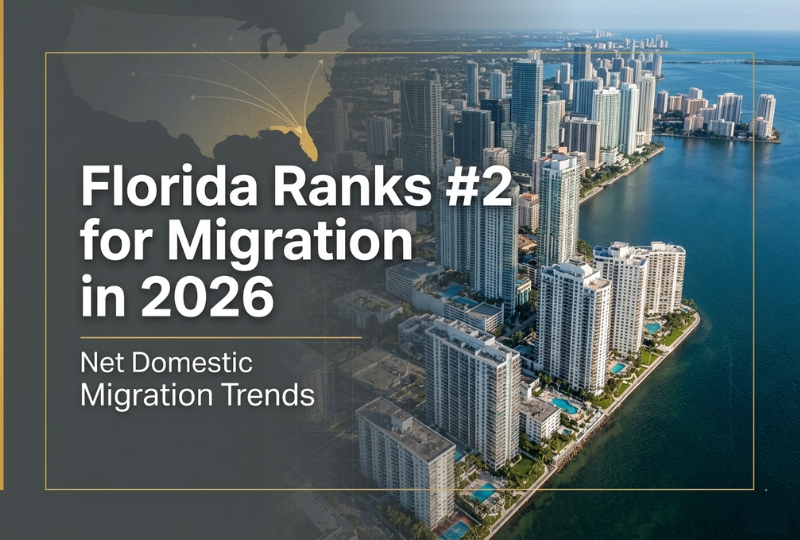
Recent migration data indicates that Florida currently ranks as the No. 2 destination for net domestic migration in the United States. This ranking is not merely a reflection of volume, but a testament to the state’s enduring appeal for high-income earners and corporate entities seeking a more favorable economic climate.
A Top-Tier Migration Destination Despite Market Normalization
Florida remains a leading inbound state, maintaining its position in the top tier of national migration indexes. However, it is essential for investors to understand the context of this ranking. The market is currently experiencing a normalization period following the unprecedented surge seen several years ago.
According to recent market data, the state has successfully navigated the shift from the 2022 peak to a more stable environment in 2026. While the rankings remain high, the velocity of movement has adjusted to reflect broader national economic trends and the rising costs of relocation.
Key Migration Data and Trends in 2026
The statistics for 2025 and 2026 reveal a market that is consolidating its gains. While the numbers are lower than the historical anomalies of 2022, they represent a solid foundation for continued commercial development.
Positive Net Migration: Net domestic migration remains positive, with figures hovering around 22,000 to 23,000 for the 2025 cycle.
Normalization from Peak: Current migration levels have declined approximately 80% to 93% from the 2022 peak, when over 300,000 residents moved to the state annually.
National Population Rank: Despite the slower pace, Florida continues to rank No. 2 in overall population growth nationally.
Inbound Dominance: Florida continues to outperform the vast majority of other states in terms of inbound moves, staying ahead of former high-growth competitors.
Wealth Migration and Economic Impact
Perhaps the most significant metric for commercial real estate investors is not the number of people moving, but the amount of wealth they bring with them. Florida is currently experiencing a concentrated inflow of high-income individuals that is reshaping the state's economic profile.
Based on trusted economic reports, Florida is generating an annual income inflow exceeding $20 billion. Looking at a broader timeframe, the state saw a staggering $137 billion in total wealth inflow between 2019 and 2023. This wealth migration provides a substantial cushion for the local economy and drives sustained demand for luxury residential properties, high-end retail, and sophisticated commercial infrastructure.
Why Florida Continues to Attract Residents
Several structural advantages continue to act as magnets for both individuals and businesses. These factors have proven to be durable even as other market conditions fluctuate.
Tax Advantages
The absence of a state income tax remains a primary driver for wealth migration. For high-net-worth individuals and successful business owners, the move to Florida represents a significant increase in after-tax income and capital preservation.
Business Climate and Job Opportunity
Florida’s business-friendly environment, characterized by limited regulation and a supportive legislative framework, continues to attract corporate relocations. This corporate migration creates a self-sustaining cycle of job creation and further domestic migration.
What is Slowing Migration Growth
While the outlook remains positive, it is important to acknowledge the headwinds that have contributed to the normalization of migration growth in 2026.
Rising home prices across the state have increased the barrier to entry for many potential residents. Additionally, insurance costs and climate risk assessments have become more prominent factors in the decision-making process for those relocating from out of state. Recent migration data indicates that these costs, combined with a general return-to-office trend in some sectors, have led to a more cautious approach to relocation compared to the flexibility seen in previous years.
Implications for Commercial Real Estate
For the commercial real estate sector, these migration trends offer a roadmap for strategic investment. The focus has shifted from speculative growth to quality and location-driven assets.
Multifamily demand remains strong, particularly in areas that can accommodate the high-income demographic moving into the state. Retail follows this wealth, with a significant need for new, experiential spaces in growing secondary markets. While the office sector faces national challenges, select Florida markets continue to see activity driven by the persistent trend of corporate headquarters and satellite offices moving to the Sunshine State.
Regional Hotspots Driving Growth
The growth in 2026 is not uniform across the state. Specific regions continue to dominate the migration landscape.
South Florida, encompassing Miami, Broward, and Palm Beach, remains the primary recipient of high-wealth migration. Meanwhile, the Central Florida region, particularly the Orlando metropolitan area, is seeing robust growth driven by both tourism and an expanding tech and logistics sector. Emerging secondary markets are also gaining traction as residents look for a balance between Florida’s lifestyle benefits and a more manageable cost of living.
Outlook for 2026 and Beyond
The long-term growth fundamentals for Florida remain intact. While the era of explosive, post-pandemic migration has concluded, it has been replaced by a more sustainable and economically potent form of growth.
Continued inbound demand and massive wealth inflow suggest that Florida will remain a preferred destination for institutional capital. The state’s ability to attract the nation’s top earners and most innovative businesses ensures that its real estate market will remain among the most resilient and dynamic in the country for years to come.