
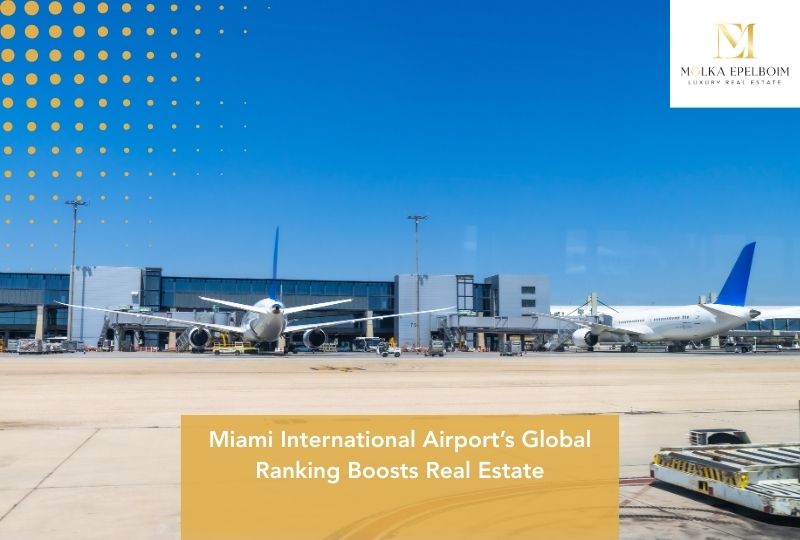
Miami International Airport (MIA) has officially secured its position as the No. 2 airport in the United States for international passengers and No. 34 globally, reinforcing Miami’s status as one of the world’s most important travel gateways. This ranking is more than an aviation milestone—it’s a powerful economic signal with direct implications for Miami’s real estate market.
As global travel demand surges and Miami continues to attract international visitors, investors, and relocating families, MIA’s performance becomes a key indicator of long‑term real estate strength. The airport’s rising global profile is helping fuel demand across residential, commercial, and luxury property sectors.
MIA Growth & Passenger Data
Recent data highlights MIA’s exceptional growth trajectory. In 2025, the airport handled 55.3 million passengers, including 24.8 million international travelers, reaffirming its role as a premier global gateway. Passenger traffic remained strong despite a national decline in domestic travel, demonstrating Miami’s unique resilience and international appeal.
Additional insights include:
International traffic strength: Nearly 25 million international passengers in 2025, a figure that places MIA among the busiest international hubs in the Western Hemisphere.
Global ranking: MIA’s position at #34 worldwide reflects its expanding connectivity to Europe, Latin America, and the Caribbean.
Airline and route expansion: With over 80 airlines serving 150+ destinations, MIA continues to broaden its reach.
These numbers signal rising global interest in Miami—not just as a vacation destination, but as a place to live, invest, and build businesses. Strong international connectivity consistently correlates with increased foreign real estate investment and long‑term population growth.
Economic Impact of MIA on the Miami Region
A globally active airport is a powerful economic engine. In 2025, MIA and PortMiami generated a combined economic impact of $242.8 billion, supporting nearly 1.2 million jobs across Miami‑Dade County.
Key economic contributions include:
Job creation: Airport operations, tourism, logistics, and trade support hundreds of thousands of direct and indirect jobs.
Tourism growth: Miami remains one of the most visited cities in the U.S., with MIA serving as the primary entry point for international tourists.
Business relocations: Companies in finance, tech, and logistics increasingly choose Miami for its global accessibility.
Foreign direct investment: International investors view Miami as a stable, globally connected market with strong long‑term upside.
These economic forces directly influence real estate demand, driving both residential and commercial growth across the region.
Direct Impact on the Real Estate Market
a. Increased Buyer Demand
MIA’s ranking strengthens Miami’s position as the gateway to the Americas, making it the preferred entry point for international buyers from Latin America, Europe, and beyond. With nearly 25 million international passengers annually, the pipeline of potential buyers remains robust.
Foreign buyers have historically represented a significant share of Miami’s real estate activity, and strong air access enhances:
Relocation interest
Second‑home purchases
Investment property demand
Long‑term migration trends
b. Investment & Development
International connectivity fuels rental demand, especially in neighborhoods favored by global tenants. Investors benefit from:
High occupancy rates in central and coastal submarkets
Strong luxury demand, driven by global high‑net‑worth individuals
New development opportunities aligned with Miami’s expanding global profile
Neighborhoods such as Brickell, Downtown, Edgewater, and Miami Beach continue to attract international capital seeking stable returns and lifestyle appeal.
c. Commercial Real Estate
MIA’s growth also boosts commercial sectors:
Office demand rises as multinational companies expand Miami operations.
Hospitality development accelerates, supported by record tourism and business travel.
Short‑term rentals thrive due to consistent international visitor volume.
Industrial and logistics properties benefit from MIA’s cargo expansion, including a 13.6% increase in freight volume in 2025.
Case Studies & Market Indicators
Miami’s real estate market continues to show strong performance heading into 2025–2026:
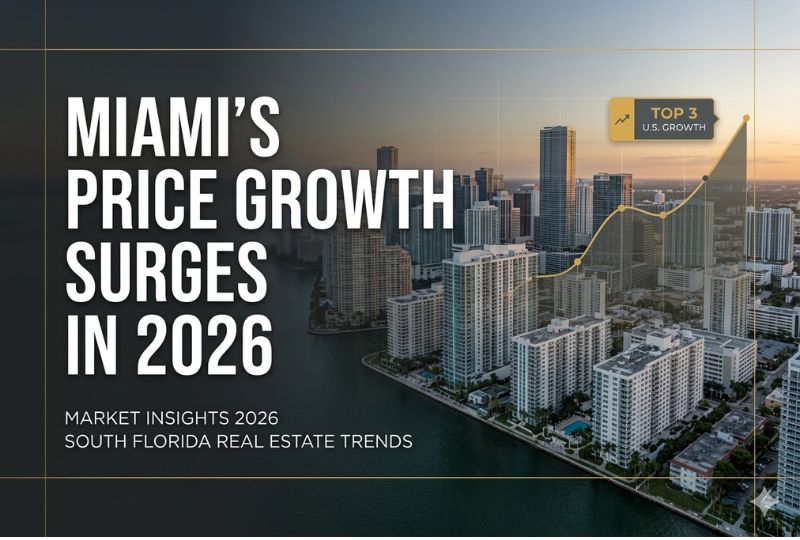
Price appreciation: Many Miami neighborhoods have experienced steady year‑over‑year price growth, supported by migration and international demand.
Rental growth: High demand from global tenants keeps rental rates elevated, especially in Brickell, Downtown, Wynwood, and Doral.
Neighborhood winners:
Brickell – Global finance hub attracting international professionals
Downtown Miami – Walkable urban core with new luxury towers
Wynwood – Creative district with rising mixed‑use development
Aventura – Popular with international families and investors
Doral – Proximity to MIA makes it a logistics and residential hotspot
Market forecasts from industry analysts point to continued growth, driven by Miami’s expanding global connectivity and economic diversification.
Future Outlook
Miami’s trajectory as a global hub is accelerating. MIA’s $9 billion modernization plan aims to expand capacity, improve passenger experience, and support long‑term growth.
Looking ahead:
International travel is expected to continue rising through 2026.
Miami’s population growth will remain strong due to global migration trends.
Business relocations will further strengthen commercial real estate demand.
Miami will increasingly compete with cities like New York and Los Angeles as a top global gateway.
For buyers and investors, this means sustained demand, rising property values, and long‑term market stability.
Conclusion
MIA’s ranking as the No. 2 U.S. airport for international passengers and #34 globally is more than a travel statistic—it’s a powerful indicator of Miami’s global rise. Strong international connectivity fuels economic growth, attracts global buyers, and drives real estate demand across residential, commercial, and luxury sectors.
For anyone considering buying or investing in Miami, now is the time to pay attention. The city’s global momentum is accelerating, and real estate opportunities continue to expand.
If you’re exploring Miami real estate—whether for lifestyle, relocation, or investment—connecting with a local market expert can help you identify the best opportunities in this fast‑growing global hub.